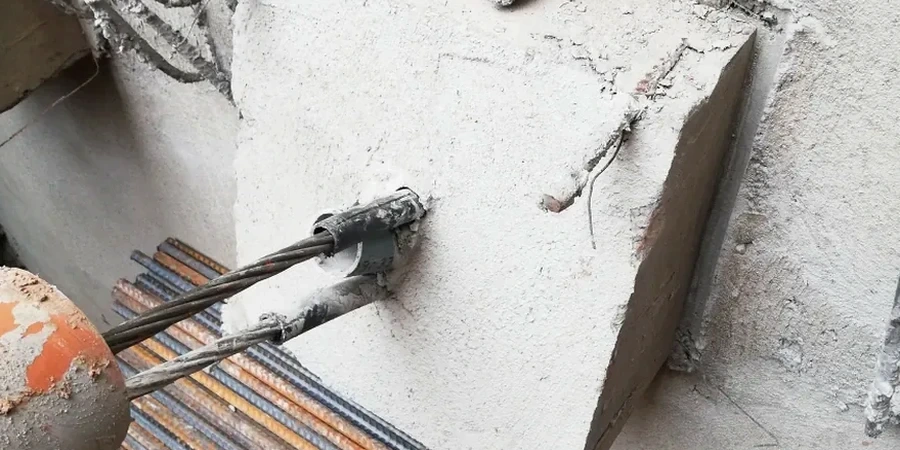
The tensioning jack is set, the load cell is reading live, and the crew is watching the dial gauge move in hundredths of a millimeter. That's the reality of anchor design and testing in St. Johns. We work with bar and strand systems that have to hold against the city's notorious wind loads and bedrock that can vary by 30 degrees of dip across just one block. The anchor head, the bearing plate, the trumpet, and the free length of the tendon — every component gets sized for a specific bond zone in the shale or sandstone that sits under the weathered till. In St. Johns, you don't guess at the unbonded length. You calculate it from the CPT logs and the actual groundwater table, which is often just a meter or two below the footing.
In St. Johns, an unstressed anchor in the wrong ground is a future excavation failure waiting to happen.