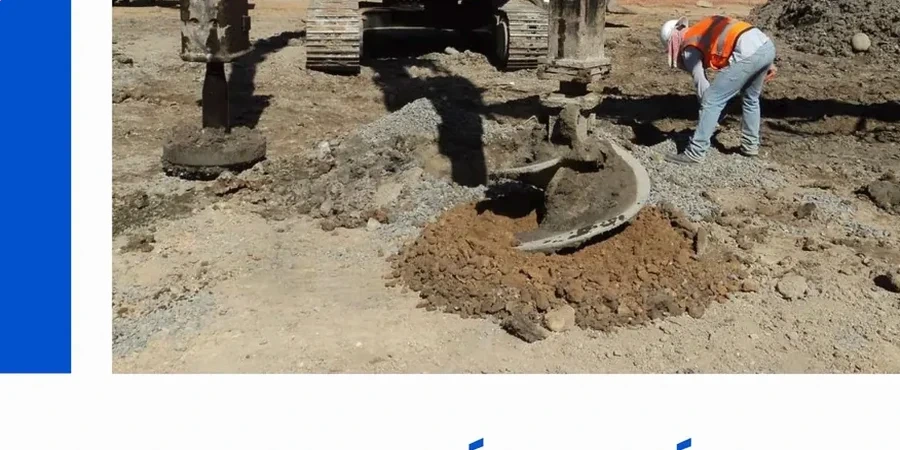
St. John's grew around its sheltered harbour, a deep basin carved into the Avalon Peninsula's bedrock. That historic growth pushed development onto challenging ground: raised bogs, marine terraces, and thick glacial till. In our experience, the real challenge beneath many St. John's sites isn't bedrock depth but the compressible organic silts and sensitive marine clays that underlie the downtown core and the expanding suburbs around Kenmount and Stavanger. A conventional footing here often means unacceptable differential settlement. This is where a properly engineered stone column design becomes a practical alternative to deep piling. We've applied this technique across St. John's projects—from industrial warehouses near the port to low-rise residential blocks—where the target is improving the ground rather than bypassing it. For sites with highly variable stratigraphy, we often pair the column layout with a CPT test to map soft zones before finalizing the grid spacing.
In St. John's marine clay, a well-designed stone column grid can cut settlement by half while keeping the project feasible through the winter construction window.