GEOTECHNICALENGINEERING
ST. JOHNS NEWFOUNDLAND
HomeInvestigationExploratory test pit

Exploratory Test Pit Investigations in St. John's, Newfoundland

Sound ground. Sound decisions.

LEARN MORE

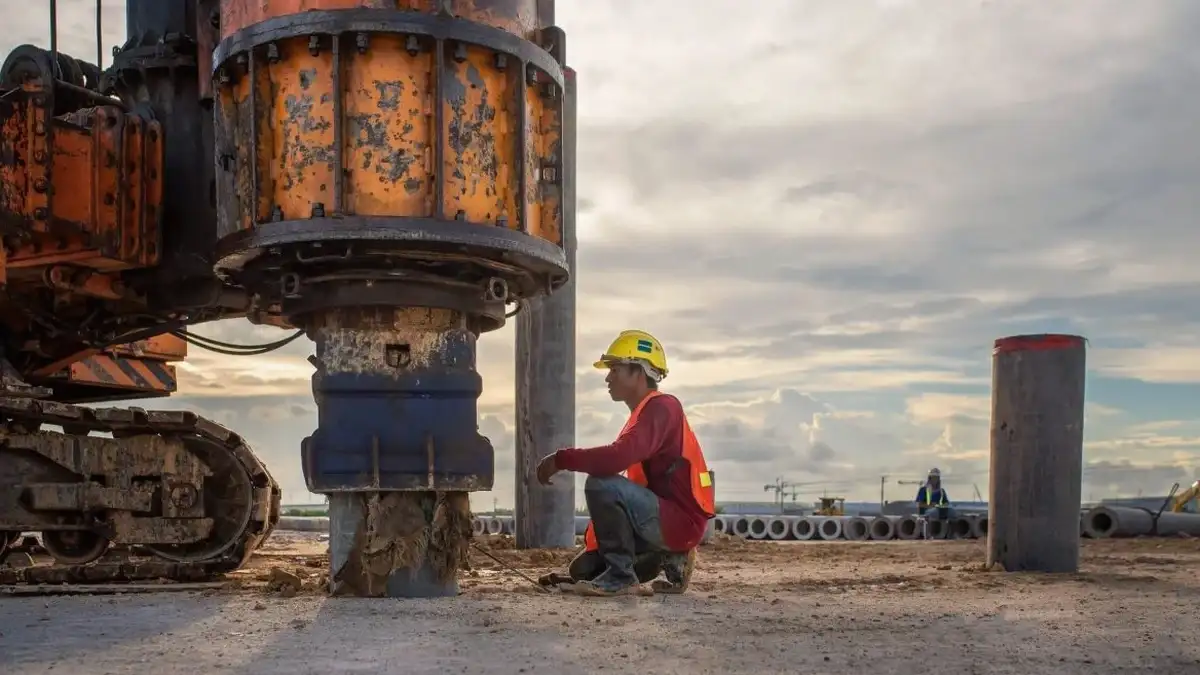
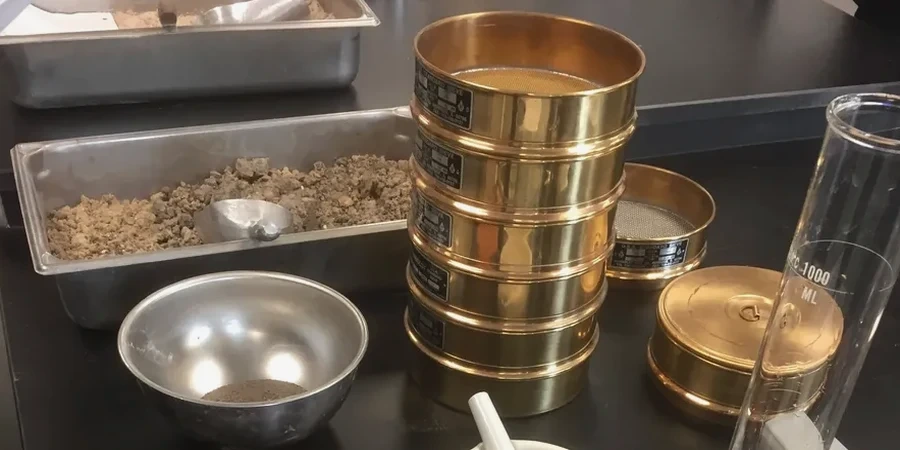
One of the most common mistakes we see in St. John's is assuming the ground is uniform once you move past the downtown slope. A project in the east end might hit weathered bedrock at a metre, while a site in Mount Pearl encounters thick, saturated glacial till requiring a different foundation approach entirely. Relying solely on boreholes without direct visual inspection can lead to significant cost overruns when unexpected ground conditions appear. Our exploratory test pit service is designed to eliminate that uncertainty. By excavating down to 4.5 metres with a track-mounted excavator, we expose the actual stratigraphy, allowing our geotechnical team to log soil horizons, measure the depth to bedrock, and assess groundwater seepage in real time. For sites with complex glacial history, combining this with grain size analysis provides the particle distribution data needed to classify the till, while a plate load test verifies bearing capacity directly on the exposed surface before you pour any concrete.

An exploratory test pit in St. John's often reveals more about site variability in one hour than a week of reviewing desktop geological maps.
Our service areas

How we work

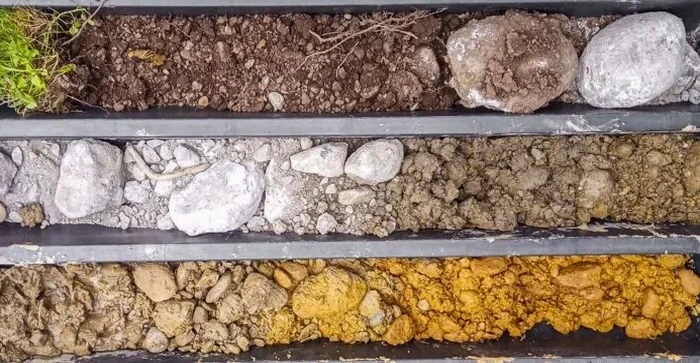
The soil profile between Quidi Vidi and Kenmount Road tells two completely different stories. Near the harbour, you are often dealing with marine clays and fill overlying shale, where test pits can reveal the extent of anthropogenic material that boreholes might miss. Up on the Kenmount slope, the glacial till is stiffer, but contains erratic boulders that can stop a drill bit cold—an excavator bucket handles them more predictably. Our pits are typically dug 2.5 to 4.5 metres deep, with stepped sidewalls where the CSA A23.3 safety guidelines require it. Once open, we log the profile according to the Canadian Foundation Engineering Manual, collecting disturbed and undisturbed samples for lab testing. When the exposed face shows a transition zone of weathered rock, we often recommend pairing the pit with in-situ permeability testing to measure how water moves through the fractured zone, a critical factor for basement dewatering design in St. John's variable terrain.
Exploratory Test Pit Investigations in St. John's, Newfoundland
Technical reference — St. Johns Newfoundland

Local geotechnical context

We were called to a commercial site off Torbay Road where a foundation design had been completed based on two boreholes that showed competent sandstone. During the excavation of our first test pit, we uncovered a lens of soft, organic silt—an old infilled pond, invisible from the surface and missed entirely by the boreholes spaced 20 metres apart. The design loads would have caused differential settlement severe enough to crack the slab within the first freeze-thaw cycle, a particularly aggressive phenomenon in St. John's where our average of 100 freeze-thaw days per year accelerates structural damage. Skipping exploratory test pits on sites with known glacial variability is a gamble that rarely pays off. The direct visual inspection gives you a continuous profile of the ground, revealing soft spots, fill zones, and seepage paths that discrete boreholes simply cannot resolve with the same level of certainty.

Need a geotechnical assessment?

Reply within 24h.

Email: [email protected]

Relevant standards

NBCC 2020 (National Building Code of Canada), CSA A23.3 (Design of Concrete Structures), Canadian Foundation Engineering Manual (CFEM 4th Edition), ASTM D2488 (Visual-Manual Soil Description)

Typical values

ParameterTypical value
Maximum Depth (with step)4.5 m
Bucket Width600 to 900 mm
Typical Excavation Time2 to 4 hours per pit
Sample CollectionDisturbed and undisturbed (block)
Groundwater ObservationInflow rate and stabilized level
Backfill MaterialCompacted pit-run gravel or native soil
Applicable StandardCSA A23.3, NBCC 2020

Questions and answers

How deep can you excavate a test pit in St. John's?

We typically excavate to depths between 2.5 and 4.5 metres. Beyond 4.5 metres, the CSA A23.3 requirements for shoring and benching become more extensive, and in many cases switching to a CPT test or drilling program becomes more practical. The actual achievable depth also depends on the stability of the soil and whether we hit bedrock or a high groundwater table earlier than expected.

What is the cost of an exploratory test pit in St. John's?

For a standard test pit in the St. John's area, including excavation, logging, and backfill, you can expect a range from CA$610 to CA$1,110 per pit. The final figure depends on access constraints, the required depth, and the number of pits on site, as mobilizing the excavator and operator is a fixed cost that spreads more efficiently across multiple pits.

How long does it take to complete a test pit investigation?

A single pit can be excavated, logged, sampled, and backfilled in half a day. For a multi-pit program across a larger parcel, we can typically complete three to four pits in one day, assuming reasonable access and weather. Our field report with the stratigraphic logs and preliminary recommendations is usually ready within three business days.

Do I need utility locates before you dig?

Absolutely. We require a current utility locate from the provincial one-call service before any excavation begins. St. John's has a dense network of buried services in older neighbourhoods, and hitting an unmarked line is both dangerous and expensive. We coordinate the locate request as part of our pre-mobilization checklist.

Location and service area

We serve projects in St. Johns Newfoundland and surrounding areas.

View larger map