GEOTECHNICALENGINEERING
ST. JOHNS NEWFOUNDLAND
HomeFoundationsRaft/mat foundation design

Raft Foundation Design in St. John's Newfoundland

Sound ground. Sound decisions.

LEARN MORE

A six-story apartment slab pour near Quidi Vidi Lake stalled after hitting a lens of saturated organic silt at 4 meters — the kind of surprise St. John's ground loves to deliver. The fix wasn't deeper excavation; it was a rigid mat foundation that bridged the soft spot and kept column loads uniform across the footprint. That's the reality of raft foundation design in this city: you're engineering a floating platform that works with the ground, not against it. The North Atlantic's relentless freeze-thaw cycles chew up isolated footings here, but a properly designed mat distributes structural loads so broadly that differential settlement becomes a non-issue. We combine decades of local borehole data with in-situ permeability testing to characterise drainage conditions before the concrete ever hits the rebar.

A raft foundation doesn't just sit on the ground — it spreads the building's weight over enough area that even St. John's notorious marine silts can carry the load reliably.

Our service areas

How we work

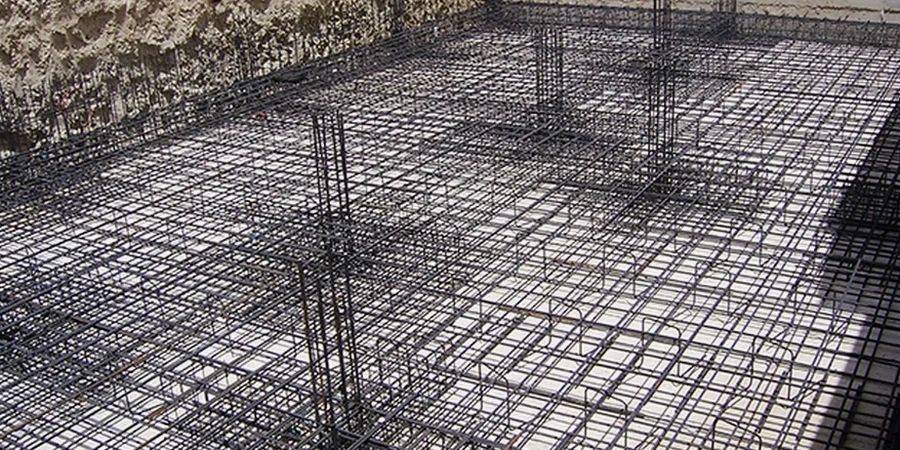
Under the National Building Code of Canada and CSA A23.3, a raft foundation in St. John's must account for frost penetration depths that regularly exceed 1.2 meters on exposed sites, coupled with the variable compressibility of glacial till and marine clay deposits that blanket the Avalon Peninsula. Our design process starts with a detailed stratigraphic model built from SPT data, then moves into finite element analysis to map bending moments and soil-structure interaction across the entire slab. We specify concrete grades, reinforcement layouts, and thickened edge beams where punching shear demands it. When the subgrade includes weathered shale — common along the Southside Hills — we integrate stone columns as ground improvement beneath the mat, reducing long-term creep settlement without overdesigning the structural slab. Every calculation ties back to a site-specific geotechnical report, never to generic assumptions pulled from a textbook.
Raft Foundation Design in St. John's Newfoundland
Technical reference — St. Johns Newfoundland

Local geotechnical context

We've seen developers try to swap a raft foundation for a cheaper grid of strip footings on a site near Waterford River where the upper 3 meters was fill over compressible clay — and within two winters, the slab corners had cracked and doors wouldn't close. The error is assuming that because the topsoil looks dry in August, the subgrade will behave. In St. John's, perched groundwater tables rise fast after the first fall storm, and clay layers that felt stiff during construction soften under sustained saturation. A raft foundation without proper underslab drainage and a capillary break becomes a bathtub that floats when the water table spikes. The cost of post-construction underpinning or mudjacking dwarfs the upfront investment in a properly engineered mat — and the legal headaches from tenants in a tilting building are worse.

Need a geotechnical assessment?

Reply within 24h.

Email: [email protected]

Explanatory video

Relevant standards

NBCC 2020 (National Building Code of Canada), CSA A23.3:19 (Design of Concrete Structures), CSA A23.1:19/A23.2:19 (Concrete Materials and Methods), ASTM D1194 (Plate Load Test for In-Situ Soil), CFEM (Canadian Foundation Engineering Manual, 4th Ed.)

Typical values

ParameterTypical value
Typical Slab Thickness450 to 900 mm
Frost Protection Depth1.2 m (per NBCC climatic data)
Concrete Strength30 to 40 MPa (CSA A23.1)
Reinforcement Grade400W or 500W (CSA G30.18)
Allowable Bearing Pressure75 to 150 kPa (site-dependent)
Max. Total Settlement25 mm (clay) / 40 mm (granular)
Modulus of Subgrade ReactionDetermined via plate load test

Questions and answers

When is a raft foundation better than strip footings in St. John's?

Whenever the bearing capacity of the near-surface soil is below 100 kPa, or the total settlement under isolated footings would exceed 25 mm. St. John's has extensive areas of marine clay and organic silt where raft foundations become the only practical shallow foundation option. If the building has a basement and the water table is high, a raft also acts as a structural slab to resist hydrostatic uplift — something strip footings cannot do.

How much does raft foundation design cost for a typical project in St. John's?

For a standard residential or small commercial building in the St. John's area, the full design package — including geotechnical investigation, bearing capacity analysis, and structural mat design with stamped drawings — typically ranges from CA$1.370 to CA$6.130, depending on building footprint, number of storeys, and soil complexity.

How deep must the raft foundation be for frost protection?

Per NBCC 2020 climatic data for St. John's, the minimum depth to the underside of the raft slab is 1.2 meters below finished grade for unheated buildings, or 0.45 meters for heated structures with adequate underslab insulation. We specify the exact depth based on the building occupancy and the thermal properties of the subgrade material.

What soil investigation is required before designing a raft foundation?

We require a minimum of three boreholes or CPT soundings extending to a depth of at least twice the building width, or until competent bedrock is encountered. Standard penetration tests (SPT) are performed at 1.5-meter intervals, and undisturbed Shelby tube samples are taken in clay layers for consolidation testing. Groundwater monitoring over at least one seasonal cycle is strongly recommended for sites near the harbour or Waterford Valley.

Can a raft foundation be used on sloping sites in St. John's?

Yes, but it requires a stepped or sloping raft configuration with careful attention to lateral earth pressures and sliding stability. Sites along the Southside Hills often have 10–15% grades, and we model the raft as a retaining structure at the downhill face. Underpinning of adjacent properties must also be considered, which falls under Part 4 of the NBCC and requires a separate excavation support design.

Location and service area

We serve projects in St. Johns Newfoundland and surrounding areas.

View larger map