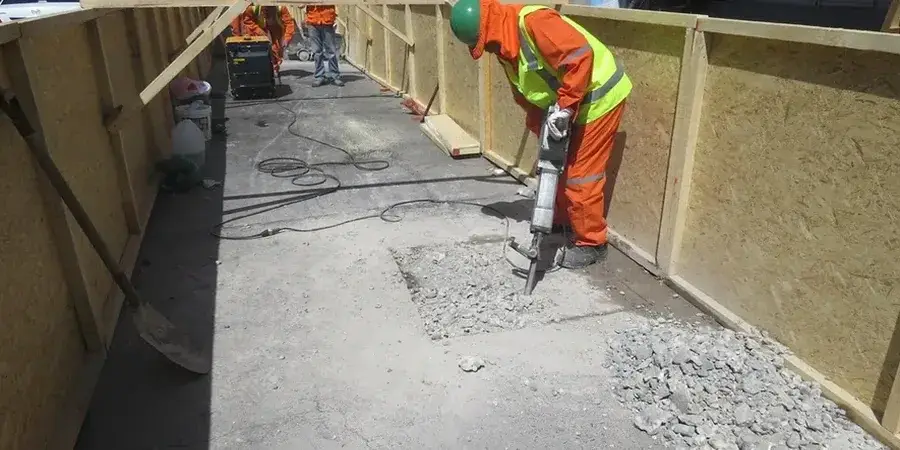
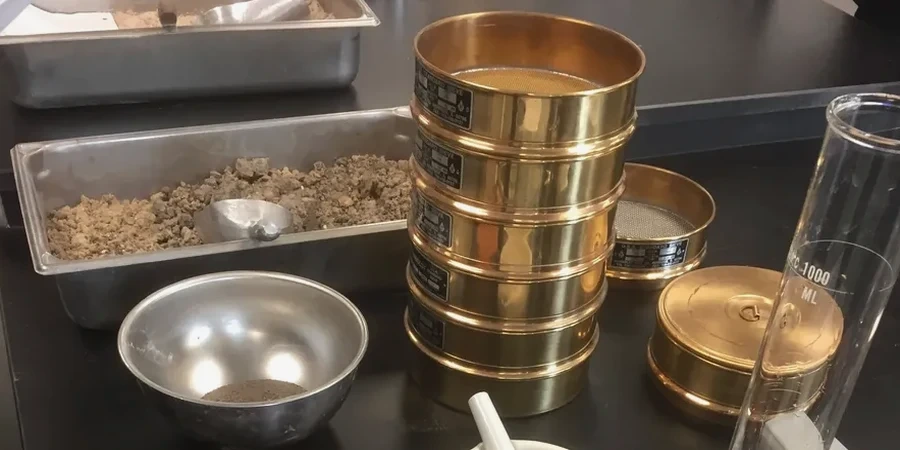
St. John's grew from a sheltered harbour into a city draped over rocky hills and peat-filled valleys, leaving a patchwork of subgrade conditions that still surprises contractors. A road rebuilt over Signal Hill's weathered sandstone behaves nothing like one crossing the silty clays near Quidi Vidi, and assuming uniform bearing capacity has delayed too many projects. The laboratory CBR test provides the soaked strength value engineers need to design pavement sections that survive our freeze-thaw cycles and spring melt without premature rutting. Because the city sits on the Avalon Peninsula's complex glacial stratigraphy—where till, marine clay, and bedrock can appear within a single block—we pair the grain size analysis with every CBR program to flag fines-sensitive materials before compaction begins, and we often recommend in-situ permeability tests when the subgrade shows high silt content near drainage paths.
A soaked CBR value below 3% in St. John's marine clay means the subgrade will pump water through cracks with every freeze-thaw cycle—pavement failure is a matter of when, not if.