GEOTECHNICALENGINEERING
ST. JOHNS NEWFOUNDLAND
HomeInvestigationSPT (Standard Penetration Test)

SPT Testing in St. Johns: Get Real N-Values for Your Foundation

Sound ground. Sound decisions.

LEARN MORE

St. Johns sits on some of the oldest rock on the planet, but the overburden tells a completely different story. The city’s elevation climbs from sea level to over 140 meters at Signal Hill, and that steep topography means a single lot can transition from weathered shale to saturated glacial till in less than 30 meters. For the 2022 Atlantic Place redevelopment, the geotechnical report flagged highly variable N-values between just two boreholes spaced 15 meters apart—one refusal at 3 meters, the other with N=6 down to 9 meters. That’s the reality of building in St. Johns. Our SPT drilling crew has worked the full stretch of the city, from the Battery to Kenmount Hill, and we know that guessing the bearing layer here costs more than any test ever will. We run the Standard Penetration Test to NBCC 2020 standards, logging every 18-inch increment and bagging samples for the lab, so your structural engineer gets numbers they can actually use—not a generic soil report that glosses over the glacial chaos beneath the topsoil.

In downtown St. Johns, we’ve seen N-values swing from refusal to N=6 within 15 meters laterally. If your foundation design assumes uniform soil, you’re designing for a site that doesn’t exist.
Our service areas

How we work

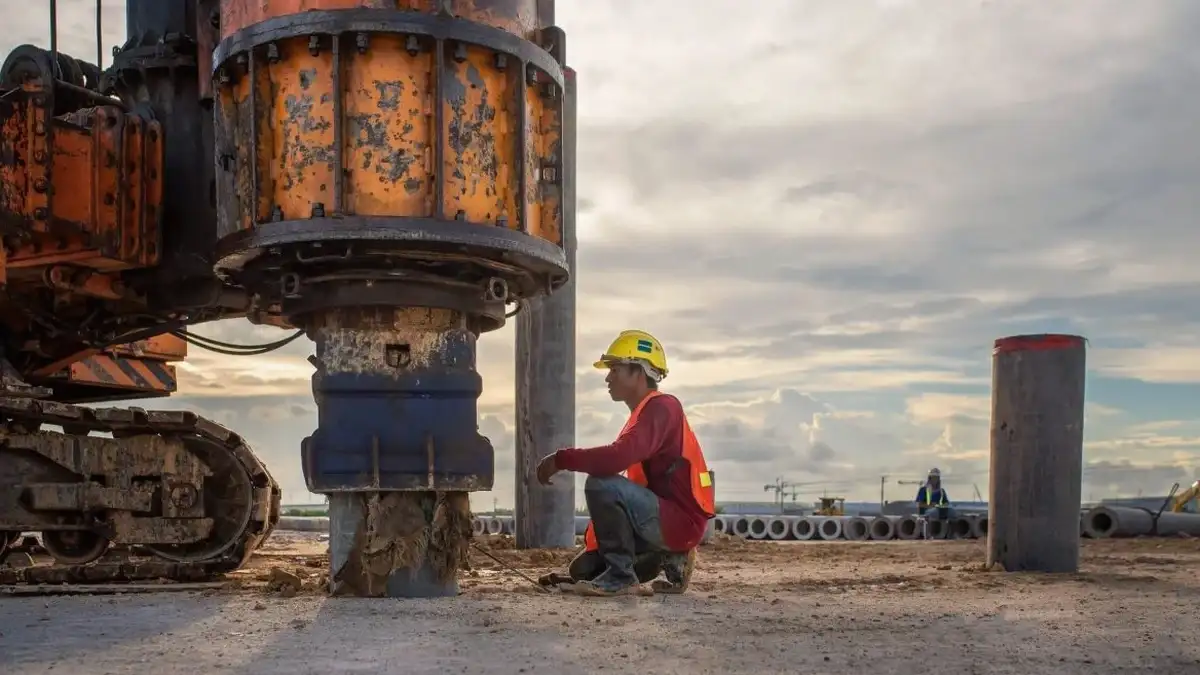
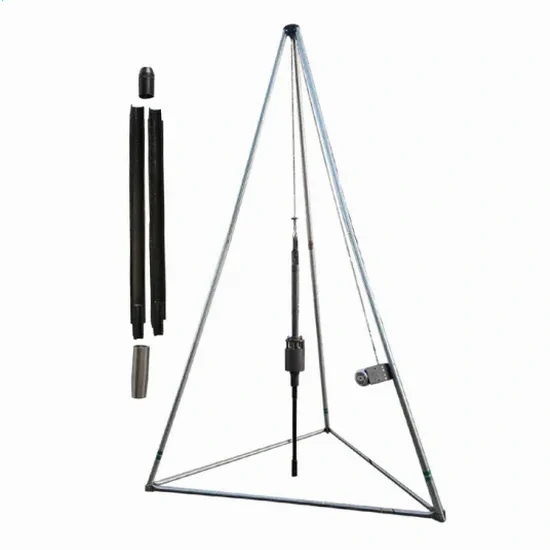
Drive a split spoon on Water Street and you might hit compact gravel at 4 meters with N-values pushing 45. Move half a kilometer east into the Southside Hills and you’re fighting marine clay that reads N=3 for 10 meters straight. That contrast is exactly why we treat every St. Johns SPT program as its own investigation. The test itself follows ASTM D1586 with a 140-pound hammer dropping 30 inches, but the real skill is knowing where to stop and when to keep going. In the east end, we’ve encountered refusal on bedrock at 2 meters on a Tuesday, then cored through 11 meters of loose stony fill on a Thursday job two blocks away—old infill from the 1892 Great Fire that never shows up on any city map. Our field team runs a calibrated automatic trip hammer on a CME-75 rig, and we log every blow count in real time against the driller’s log. For deeper investigations where you need continuous stratigraphy, we also pair SPT with CPT testing to catch thin silt lenses that a split spoon alone might miss. Every sample gets bagged, labeled, and walked into our St. Johns lab by the same crew that pulled it out of the ground—no courier delays, no lost chain of custody.
SPT Testing in St. Johns: Get Real N-Values for Your Foundation
Technical reference — St. Johns Newfoundland

Local geotechnical context

Last fall we got called to a site off Torbay Road where a contractor had already poured footings based on a desktop soil survey from 1978. The survey said ‘dense till at 2 meters.’ What the excavator actually found was 6 meters of saturated organic silt—old bog fill from when the airport access road was built. The footings had to be demolished, the hole backfilled with engineered fill, and the whole foundation redesigned for a mat slab. Total delay: 11 weeks, plus a change order that made the original SPT budget look like pocket change. That’s not an outlier in St. Johns; it’s the norm when you skip the subsurface investigation. The city’s patchwork of natural soils, historic fill, and shallow bedrock creates a site profile that no amount of GIS data or neighboring boreholes can predict. We’ve pulled wood debris and brick fragments out of split spoons in the Georgestown neighborhood—remnants of structures that burned in 1892, now buried under 4 meters of subsequent fill. Without SPT data, you’re not just guessing bearing capacity; you’re gambling on what’s actually down there.

Need a geotechnical assessment?

Reply within 24h.

Email: [email protected]

Relevant standards

NBCC 2020: National Building Code of Canada, Part 4 structural design provisions, CSA A23.3: Design of concrete structures, foundation requirements, ASTM D1586: Standard Test Method for Standard Penetration Test (SPT) and Split-Barrel Sampling of Soils

Typical values

ParameterTypical value
Hammer typeAutomatic trip hammer, 140 lb, 30-inch drop
Standard referenceASTM D1586 / NBCC 2020 compliant
Borehole diameter4-inch casing typical, 6-inch for deeper holes
Sampling intervalEvery 1.5 m (5 ft) or at stratum change
N-value correctionN60 energy correction applied to all raw blow counts
Typical depth range in St. Johns3 m to 25 m, refusal on bedrock common in downtown
Sample recoverySplit spoon with brass liners, bagged and labeled on site
Reporting turnaroundPreliminary N-value log within 4 business days

Questions and answers

How much does SPT testing cost for a typical residential lot in St. Johns?

For a standard single-family residential site in the St. Johns area, a two-borehole SPT program with lab classification typically runs between CA$840 and CA$1,160 total. The final number depends on access conditions—sites on steep slopes like those in the Battery or Southside Hills may require a smaller rig or additional setup time—and on how deep we need to go before hitting refusal. If we encounter bedrock at 3 meters, that’s a quicker job than drilling through 15 meters of glacial till. We provide a firm quote after a site walk, never a surprise invoice.

How many boreholes do I need for my building in St. Johns?

The short answer: at least two for any structure larger than a detached garage. NBCC 2020 doesn’t prescribe a fixed number, but our standard for a single-family home in St. Johns is two boreholes placed at opposite corners of the footprint. For a commercial building or multi-unit residential on a lot wider than 20 meters, we recommend three or more. The reason is the glacial geology here—we’ve seen boreholes 10 meters apart hit completely different stratigraphy, and a single hole gives you a false sense of uniformity that no engineer should rely on.

What’s the difference between SPT and CPT, and which one do I need?

SPT gives you a physical soil sample every 1.5 meters that we can take to the lab for grain size, plasticity, and visual classification. CPT pushes an electronic cone into the ground and gives you a continuous profile of tip resistance and sleeve friction—great data, but no sample to hold in your hand. In St. Johns, we typically start with SPT because the glacial soils here often contain cobbles and boulders that can damage a CPT cone, and because most structural engineers want lab-classified samples for foundation design. We use CPT as a supplement when we need to detect thin silt layers between SPT intervals, especially on soft-ground sites near the harbour.

How long does it take to get the SPT report after drilling is done?

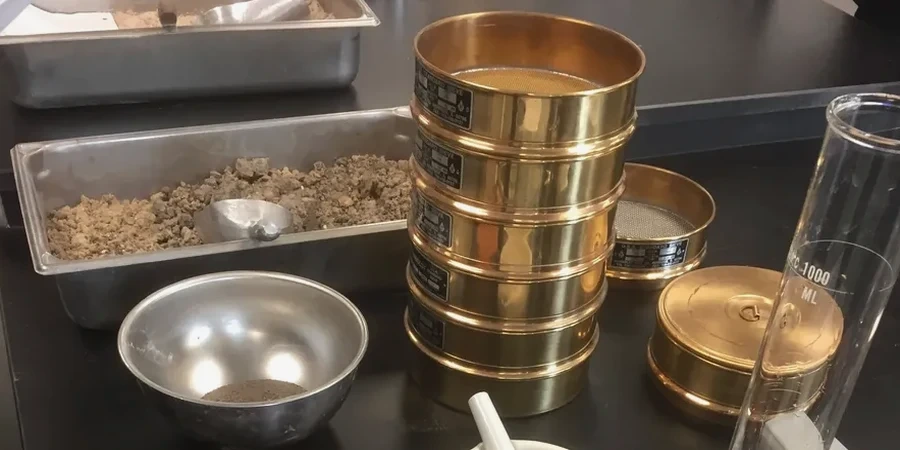
We send a preliminary borehole log with raw N-values and soil descriptions within 4 business days of completing field work—most contractors use this to keep the excavation and formwork schedule moving. The full geotechnical report with lab results (grain size curves, Atterberg limits, moisture content) and foundation recommendations follows within 10 to 12 business days. If you’re on a tight timeline, tell us before we mobilize and we’ll prioritize your lab queue. Rush turnaround is available for an additional fee, and we’ve delivered final reports in 5 business days for urgent projects.

Location and service area

We serve projects in St. Johns Newfoundland and surrounding areas.

View larger map