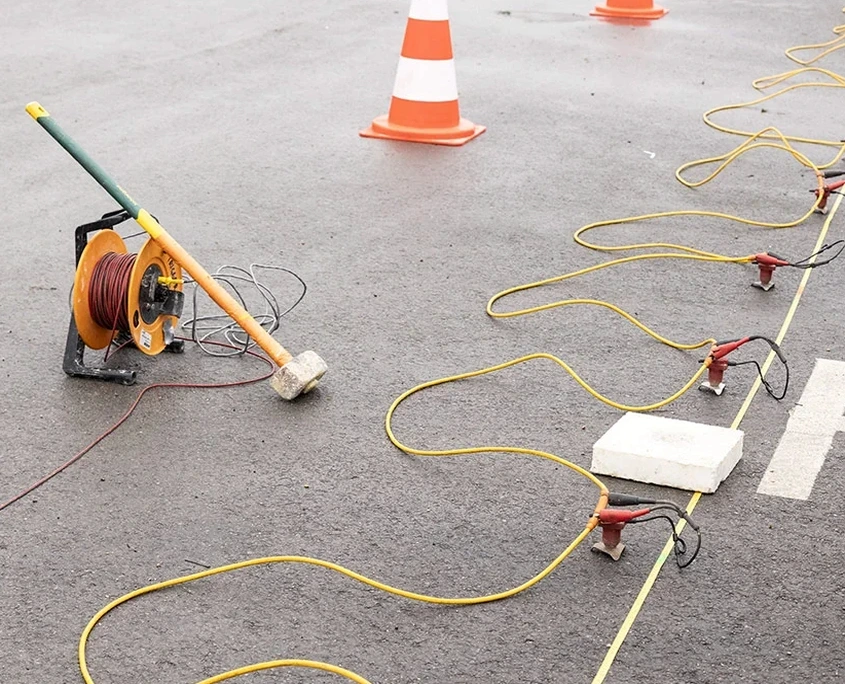
St. John's sits at 56.7°N latitude, where the Appalachian bedrock meets the North Atlantic in a maze of steep slopes and glacial overburden. The city's 2020 census counted over 110,000 residents, but the real challenge for builders here is what lies beneath the thin soil cover—ancient folded sediments and fault zones that make every excavation a geological puzzle. Seismic tomography cuts through that guesswork. By measuring how compressional and shear waves travel through the subsurface, the method maps bedrock depth, fractures, and weathering zones with precision that drilling alone cannot deliver. For projects in the Waterford Valley or the slopes above Quidi Vidi, this data shapes foundation design long before the first shovel hits the ground. When combined with a targeted SPT drilling program, the geophysical model gets calibrated against physical samples, giving engineers the layered certainty they need for NBCC 2020 compliance.
Seismic tomography turns the subsurface into a velocity map—showing not just where the rock is, but how competent it actually is for excavation and foundation design.