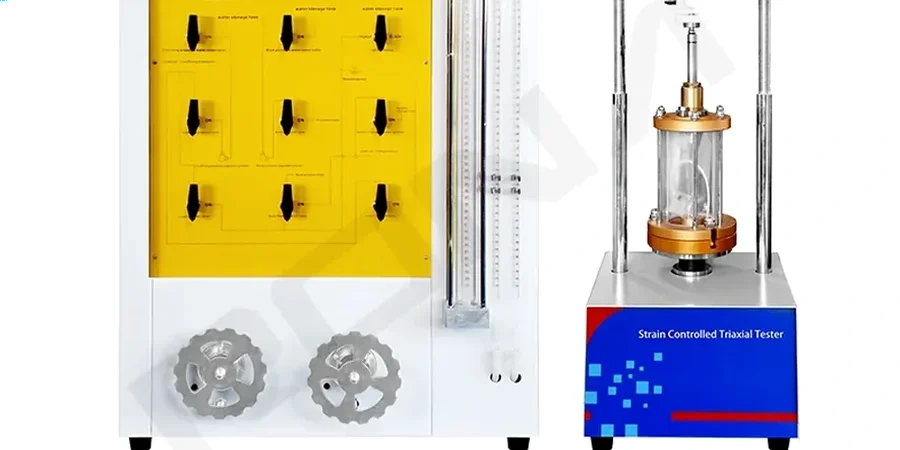
St. John’s sits at the edge of the continent, with a population of roughly 110,000 and a bedrock foundation that dips beneath hundreds of feet of glacial till and marine clay. The city’s elevation rises sharply from sea level at the harbour to over 140 meters near Signal Hill, creating a mix of steep slopes and deep soft deposits that challenge every foundation design. When a project involves excavation near the harbour or a multi-story building on the city’s eastern slopes, the triaxial test becomes the most reliable way to capture how the soil will behave under stress. In our experience, standard penetration testing alone cannot replicate the complex drainage conditions we see across the Avalon Peninsula, which is why we run both consolidated-drained and consolidated-undrained triaxial programs depending on the loading scenario. This level of detail matters because the soils here carry a history of glacial overconsolidation that standard correlations often miss, and getting the effective stress parameters wrong can lead to costly overdesign or, worse, an unexpected failure during construction.
A well-executed triaxial program on an undisturbed St. John's sample gives you three numbers that control the entire foundation cost: effective cohesion, friction angle, and the pore-pressure response under load.