GEOTECHNICALENGINEERING
ST. JOHNS NEWFOUNDLAND
HomeInvestigationCPT (Cone Penetration Test)

CPT Testing in St. John's: Cone Penetration for Complex Soils

Sound ground. Sound decisions.

LEARN MORE

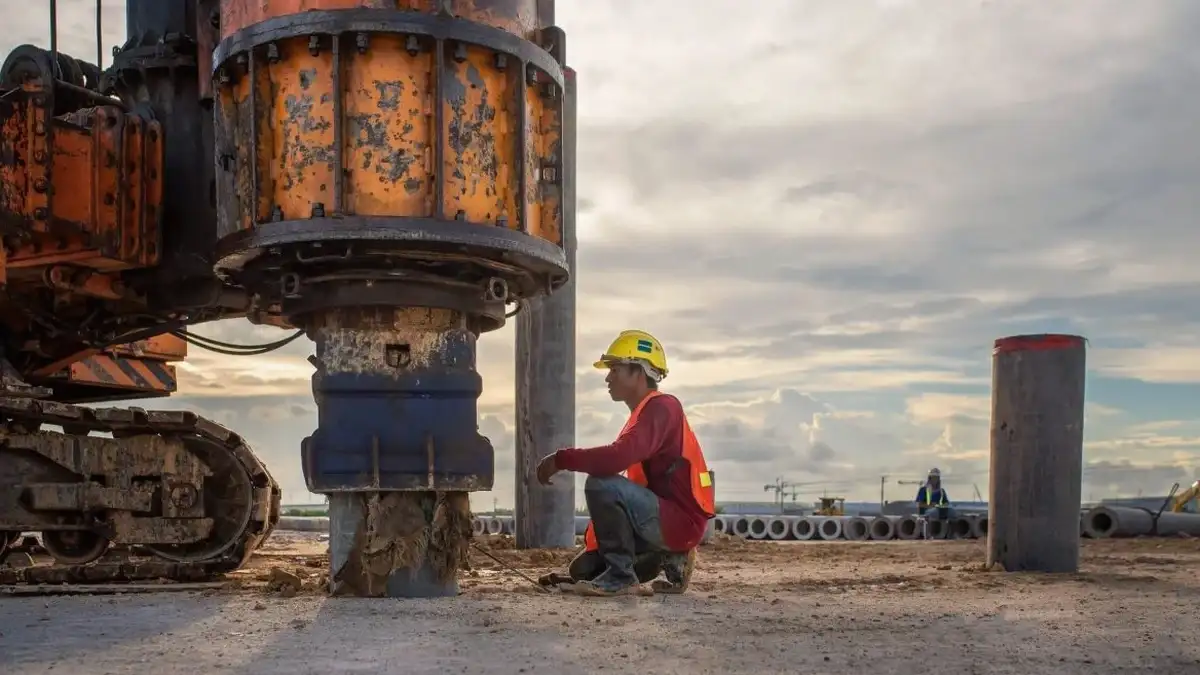
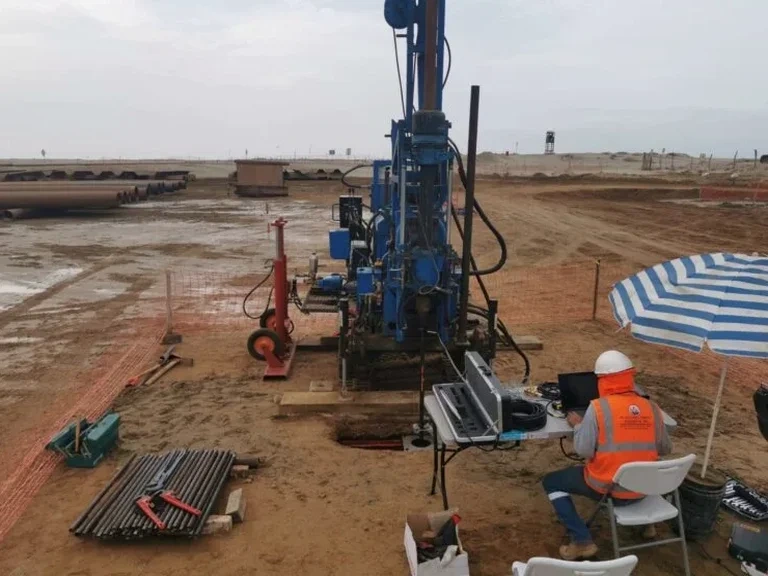
A foundation dig on Water Street hit refusal at two meters. The contractor called it bedrock. It was a glacial erratic the size of a pickup truck. That kind of surprise is common in St. John's. The city sits on a rumpled blanket of glacial till, draped over shale and sandstone, with pockets of marine clay tucked into the harbour basin. A standard borehole tells you one story at one point. A CPT test tells you the continuous story between those points. We run a 20-tonne rig through the tight streets of downtown and up the slopes of Shea Heights without missing a beat. The cone reads tip resistance, sleeve friction, and pore pressure simultaneously, giving you a stratigraphic profile that catches every lens, every transition.
When the till is dense and the schedule is tight, combining CPT with SPT drilling gives you the best of both worlds: continuous data plus a physical sample at the critical depth.

Twenty centimeters of continuous data beats a grab sample every two meters when the geology changes that fast.
Our service areas

How we work

The till in the east end near Quidi Vidi behaves differently from the silty infill behind the Marine Institute. East end till is over-consolidated, dense, and can push cone resistance past 20 MPa within five meters. The harbour fill is loose, saturated, and prone to generating excess pore pressure during penetration. We adjust our push rate and filter saturation technique for each.
Pore pressure dissipation tests tell us the consolidation coefficient right at depth, which is critical for estimating settlement time under the new builds going up along Kenmount Road. For projects on the softer clays of the downtown core, we cross-reference dissipation data with triaxial testing to build a strength profile that holds up under the scrutiny of a NBCC 2015 foundation review.
CPT Testing in St. John's: Cone Penetration for Complex Soils
Technical reference — St. Johns Newfoundland

Local geotechnical context

The rig is a 20-tonne tracked unit with a hydraulic push system mounted amidships. It levels itself on a 15-degree slope using four independent stabilizers. In St. John's, that matters. The city tilts from the harbour up to the Southside Hills, and a rig that cannot level means a cone that deviates, data that skews.
We saturation-test the filter element with glycerin before every push, because a desaturated pore pressure transducer will miss the drainage boundary in a sensitive clay, and that miss can be the difference between stable excavation and a bottom blowout. A bad dissipation curve from a single push often means the difference between a straightforward footing design and a costly deep excavation surprise.

Need a geotechnical assessment?

Reply within 24h.

Email: [email protected]

Relevant standards

ASTM D5778-20: Standard Test Method for Electronic Friction Cone and Piezocone Penetration Testing of Soils, NBCC 2015: National Building Code of Canada – geotechnical resistance factors for CPT-based design, CSA A23.3: Design of concrete structures – foundation provisions referencing in-situ testing, ISO 22476-1: Geotechnical investigation and testing – field testing – electrical cone and piezocone penetration test

Typical values

ParameterTypical value
Cone capacity20 tonne push force
Max depth in till25–30 m typical
Channels recordedqc, fs, u₂
StandardASTM D5778-20
Soil behavior typeSBT chart per Robertson (2016)
Pore pressure elementSaturated 5 MPa transducer
Data interval20 mm continuous

Questions and answers

What's the cost of a CPT test in St. John's?

For a single CPT sounding to 15–20 meters depth in the St. John's area, budget between CA$250 and CA$340 per meter. Mobilization is a separate line item and depends on access conditions. A tight lane in the Battery costs more in setup time than an open lot in Mount Pearl.

Why use CPT instead of just drilling SPT boreholes?

Drilling gives you a sample every 1.5 meters. CPT gives you a measurement every 20 millimeters. In St. John's, where the till contains lenses of sand and silt that control drainage and stability, the continuous record catches thin layers that a split-spoon sampler misses. It is faster, produces less disturbance, and generates a digital log you can analyze immediately.

Can you push through the bouldery till near Signal Hill?

Signal Hill till is notorious for large sub-angular clasts. We pre-drill through the boulder zone with a hollow-stem auger and then push the cone from the bottom of the pre-drill. If refusal is reached, we record the depth and often combine the push with a nearby test pit to physically inspect the obstruction.

How do you interpret the data for Newfoundland soils?

We use the Robertson (2016) Soil Behavior Type charts, but we calibrate them against local experience. The marine clays of the St. John's harbour plot in a narrow band of SBT zone 3, and we have a local database of lab correlations that refines the generic chart for Newfoundland conditions.

How long does a CPT sounding take and when do I get the report?

A single 20-meter push takes about 45 minutes of penetration time, plus setup and dissipation pauses. Total on-site time is typically two hours per location. The digital log is available same-day. A full interpretative report with soil behavior type classification and engineering parameters is delivered within five working days.

Location and service area

We serve projects in St. Johns Newfoundland and surrounding areas.

View larger map